Back to Blog Back to top

Pop-up-Veranstaltung zum Laden von Elektrofahrzeugen erweist sich bei der Ski-WM als Erfolg

20 March 2026

Kalema E-Mobility und CTEK beweisen, dass temporäre EV-Ladeinfrastruktur große öffentliche Veranstaltungen unterstützen kann

Eine temporäre EV-Ladeanlage, die von Kalema E-Mobility und CTEK, dem offiziellen technischen Partner der FIS-Nordischen Ski-Weltmeisterschaften 2027 in Falun, bereitgestellt wurde, demonstrierte erfolgreich das Pop-up-Laden von Elektrofahrzeugen beim jüngsten Test-Event zum Langlauf-Weltcup in Schweden.

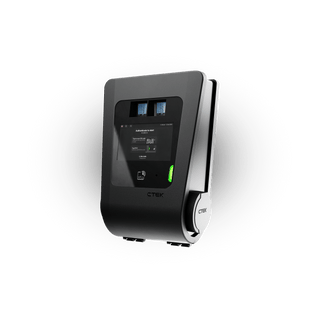
Die Anlage mit 25 CTEK CC3-Ladestationen mit zwei Anschlüssen, an denen bis zu 50 Elektrofahrzeuge gleichzeitig mit bis zu 22 kW pro Anschluss aufgeladen werden können, bewies, dass modulare Ladeökosysteme Großveranstaltungen unterstützen können. Der Erfolg schafft eine Blaupause für Sportveranstaltungen, Festivals und viele temporäre Veranstaltungsorte in ganz Europa.

Die von dem Installationsspezialisten Kalema E-Mobility entwickelte und gelieferte Pop-up-Lösung wurde an die Ladestationen der globalen Lademarke CTEK angepasst. Die Installation, bei der keine Grabarbeiten für die Verkabelung erforderlich waren, sorgte während der Veranstaltung in Lugnet am 28. Februar und 1. März für eine zuverlässige Lademöglichkeit für Zuschauer und Einsatzfahrzeuge.

Die Installation umfasste den intelligenten Lastausgleich von CTEK, der eine optimale Energieverteilung auf dem temporären Gelände sicherstellte und so die Netzstabilität aufrechterhielt, während die Verfügbarkeit der Lademöglichkeiten maximiert wurde.

Ein Lademodell für Veranstaltungen mit doppeltem Verwendungszweck

Im Gegensatz zu einer permanenten Infrastruktur wurde die Installation in Falun als flexible, kurzfristige Lösung konzipiert, die zwei unterschiedliche Nutzergruppen bedienen kann:

  • Tagsüber: Laden der Elektrofahrzeuge der Zuschauer
  • Nachts: Laden der Einsatz- und leichten Transportfahrzeuge der Veranstaltung

Dieses Dual-Use-Modell steigerte die Auslastungsraten und bewies die wirtschaftliche und betriebliche Tragfähigkeit temporärer Ladeökosysteme.

Kalema E-Mobility leitete die Projektdurchführung, von der Planung und Netzintegration bis hin zur Installation und Ausführung vor Ort. Zwei Mitarbeiter von Kalema benötigten lediglich zwei Tage, um die temporäre Anlage aufzubauen und wieder abzubauen.

Martin Götesson, CEO von Kalema E-Mobility, sagte: „Großveranstaltungen stehen unter zunehmendem Druck, nachhaltige Transportlösungen anzubieten, ohne eine permanente Infrastruktur übermäßig auszubauen. Was wir in Falun demonstriert haben, ist eine skalierbare, modulare Ladelösung, die schnell bereitgestellt, effizient verwaltet und je nach Bedarf entfernt oder erweitert werden kann.

„Dies ist ein praktisches Modell für Sportveranstaltungen, Musikfestivals und temporäre Veranstaltungsorte in den nordischen Ländern und darüber hinaus. Dies ist der Beweis für dieses Konzept. Diese Art von Lösung ist mobil und schnell zu installieren. Es ist wichtig, den Menschen die Möglichkeit zu geben, dort zu laden, wo sie es benötigen.“

Patrik Blomquist, kaufmännischer Leiter von Falun 27, sagte, dass 43 Ganztagesparkplätze mit Ladestation für Elektroautos im Voraus gebucht wurden und weitere am Tag selbst gekauft wurden: „Die mobile Ladelösung von CTEK ermöglichte es unseren Gästen, sowohl die Weltmeisterschaft zu erleben als auch gleichzeitig ihr Auto aufzuladen. Ein sehr geschätztes und nachhaltiges Element der Veranstaltung.“

Bewährtes Konzept – jetzt auf Weltmeisterschaftsniveau

Nach dem erfolgreichen Einsatz bei der Weltmeisterschaft soll die Lösung nun für die FIS Nordischen Ski-Weltmeisterschaften, bei denen CTEK als offizieller technischer Partner fungieren wird, deutlich ausgebaut werden.

Derzeit laufen Planungen für eine erweiterte Installation von 100 Ladestationen mit zwei Anschlüssen, die es ermöglichen, während der 12-tägigen Meisterschaft im Februar und März 2027 bis zu 200 Elektrofahrzeuge aufzuladen.

Für CTEK zeigt der Einsatz in Falun, wie intelligentes Lastmanagement und modulare Hardware temporäres Laden mit hoher Dichte sowohl technisch machbar als auch wirtschaftlich realistisch machen können.

Henk Lubberts, Präsident der Professional Division bei CTEK, sagte: „Veranstalter erkennen zunehmend, dass das Laden von Elektrofahrzeugen Teil des Besuchererlebnisses ist. Was Falun zeigt, ist, dass es keiner permanenten Infrastruktur bedarf, um eine sinnvolle Kapazität bereitzustellen. Mit der richtigen Technologie und dem richtigen Umsetzungspartner lässt sich dies effizient bereitstellen und bei steigender Nachfrage skalieren.“

Ein Modell für zukünftige Veranstaltungen

Da die Verbreitung von Elektrofahrzeugen in ganz Europa zunimmt, stehen Veranstalter unter Druck, den Elektroverkehr zu unterstützen, ohne sich auf feste Installationen festlegen zu müssen, die außerhalb der Veranstaltungszeiten möglicherweise nicht ausgelastet sind.

Das Falun-Modell zeigt, wie das geht:

  • Temporäre Infrastruktur kann Spitzenbedarf decken
  • Lastenausgleich kann die Netzkapazität schützen
  • Die Planung für mehrere Nutzer verbessert den ROI
  • Modulare Systeme lassen sich von Jahr zu Jahr skalieren

Da Kalema E-Mobility den Einsatz vorantreibt und CTEK zukunftssichere Ladetechnologie bereitstellt, sind die Partner davon überzeugt, dass das Modell direkt übertragbar ist auf:

  • Internationale Sportturniere
  • Musik- und Kulturfestivals
  • Ausstellungs- und Konferenzorte
  • Saisonale Tourismusdestinationen

Der Fall Falun markiert einen Wandel von einer sponsorgesteuerten Infrastruktur hin zu einer lösungsorientierten Elektrifizierung von Veranstaltungen – wobei 2027 eines der größten temporären EV-Ladeökosysteme entstehen soll, das bei einer nordischen Wintersportmeisterschaft zum Einsatz kommt.

Ähnliche Artikel

CTEK’s EV charge points donated to hospital’s family house

CTEK is proud to be supporting the amazing work of the Ronald McDonald House at Huddinge, where families can stay when their children need healthcare at Karolinska University Hospital’s Astrid Lindgren's Children's Hospital.

CTEK’s EV charge points donated to hospital’s family house

Portable Battery Boosters: An Essential Tool for Today’s Drivers

Modern compact jump starters such as CTEK’s new RB3000 and RB4000, now available in the USA and Canada, provide confidence and a rapid restart to get you where you need to be when a dead battery could leave you stranded. For many drivers, a dead battery is still one of the most frustrating ways for a journey to grind to a halt – or not even begin. It can happen at home on a cold morning, in a supermarket car park, at a campsite, outside work or miles from immediate help. Traditionally, the answer was to keep a set of jumper cables in the trunk and hope that another vehicle – and a willing helper – was nearby. Today, there is a smarter, safer and more independent option: the portable battery booster. A portable battery booster is a compact jump starter designed to provide instant starting power to a vehicle with a discharged 12V battery. Instead of relying on another car, long cables and roadside guesswork, drivers can connect the booster directly to the battery, start the vehicle and get moving again in minutes. For modern motorists – whether they drive daily, travel for leisure, manage a work vehicle or simply want reassurance – this makes a booster one of the most practical emergency tools to keep on board. Why portable battery boosters matter Vehicles are more dependent on electrical systems than ever before. Infotainment, lighting, alarms, stop-start technology, dash cams, charging ports and comfort features all place demands on the battery. Add in short journeys, colder weather, periods of inactivity or an ageing battery, and even a well-maintained vehicle can fail to start – often at the worst possible time. Portable boosters avoid that risk. They are small enough to store in the trunk, glovebox, campervan locker or workshop kit, yet powerful enough to deliver the high burst of current needed to start a vehicle. Many also double as emergency power banks and include built-in lighting, making them useful well beyond the moment a battery fails. Key benefits for drivers Independence: A booster lets drivers restart a vehicle without waiting for another car, a neighbour, a colleague or a recovery service. Speed: In many situations, the process takes only a few minutes, helping drivers avoid delays and disruption. Safety: Quality boosters use protection features such as spark-proof and reverse polarity protection, reducing the risk of mistakes during stressful roadside moments. Portability: Modern units are compact, lightweight and easy to store, so they can travel with the vehicle instead of sitting in a garage. Multi-purpose value: USB charging ports and LED lights turn many boosters into practical emergency power sources for phones, tablets, lighting and other essentials. When to boost Portable battery boosters are particularly useful for daily drivers who make frequent short trips, as batteries may not always have enough time to recharge fully. They are equally valuable for families heading away on holiday, tradespeople who rely on their vans, drivers of older vehicles, motorhome and campervan owners, boating enthusiasts, fleet operators and anyone who parks in areas where another vehicle may not be available for a jump start. They also come into their own in seasonal conditions. Cold weather can reduce battery performance, while long periods of inactivity can leave vehicles struggling to start. A booster provides a simple safeguard before an early commute, a weekend trip, a school run or an important appointment turns into an avoidable problem. Why boosters are smarter than jumper cables Jumper cables depend on circumstances drivers cannot always control. You need access to another vehicle, enough room to position both vehicles safely, someone willing to help and the confidence to connect the cables correctly. That is not always realistic on a busy roadside, in a dark car park, on a remote site or when parked nose-in against a wall. A portable booster removes much of that uncertainty. It is self-contained, immediately available and designed specifically for the job. With modern safety protections, clear indicators and compact storage, it gives drivers a more controlled and user-friendly way to deal with a dead battery. Instead of depending on luck, they can carry their own solution. CTEK RB3000 and RB4000: premium reassurance The new CTEK RB3000 and RB4000 battery boosters are designed in Sweden, and now available in the US and Canada, for drivers who want more than a basic emergency accessory. They position portable boosting as part of a complete approach to vehicle readiness: dependable starting power, practical safety features, useful everyday charging capability and the peace of mind associated with a specialist battery-care brand. The RB3000 powers up to 30 starts on a single charge whilst the RB4000 provides up to 45 starts. Once charged up, that power is long-lasting: both CTEK boosters hold power for up to six months, ensuring readiness whenever it’s needed. Both models reflect what modern drivers increasingly expect from emergency equipment: compact design, quick setup, clear usability, robust safety thinking and additional functionality that makes the unit useful even when the car starts first time. In short, they are not just jump starters; they are confidence tools. Peace of mind in the trunk No driver plans for a dead battery, but every driver can prepare for one. A portable battery booster turns an inconvenient breakdown into a manageable pause, helping people get back on the road quickly and safely. For motorists who value reliability, independence and practical preparedness, the CTEK RB3000 and RB4000 offer premium solutions that make sense before the problem happens – not after.

Portable Battery Boosters: An Essential Tool for Today’s Drivers

CTEK RB 3000 and RB 4000 boosters now available in North America

October 06 2026 — CTEK has announced that its RB 3000 and RB 4000 portable boosters are now available in North America. Already well received in Europe and Australia, the two models bring powerful jump-starting capability and practical everyday features to drivers across the region.

CTEK RB 3000 and RB 4000 boosters now available in North America - CTEK

Charge, Boost, Stay Ready: Five Simple Ways to Avoid a Flat Battery

Charging a car battery regularly, recognising the early signs of low charge and carrying a compatible booster can overcome the risks of a flat battery. On Charge Your Car Day 2026, these five practical steps explain how chargers and boosters work together to help drivers stay ready.

Charge, Boost, Stay Ready: Five Simple Ways to Avoid a Flat Battery - CTEK

Why Short Journeys Could Be Slowly Draining Your Battery

If you are asking “why won't my car start?”, repeated short journeys may be part of the answer. Each start uses a large burst of battery power, and brief drives may not give the vehicle enough time to replace it. Regular charging can help prevent a gradual loss of charge. This Charge Your Car Day on 5th October, learn how to Stay Ready.

Why Short Journeys Could Be Slowly Draining Your Battery - CTEK

150 Drains on Your Battery – Are You and Your Vehicle Ready?

Charge Your Car Day is on 5th October and encourages drivers to check, charge and protect their vehicle’s 12V battery. With modern cars relying on up to 150 electrically powered features that consume energy, regular battery care and access to a booster can help motorists stay ready for all the journeys that matter.

150 Drains on Your Battery – Are You and Your Vehicle Ready? - CTEK