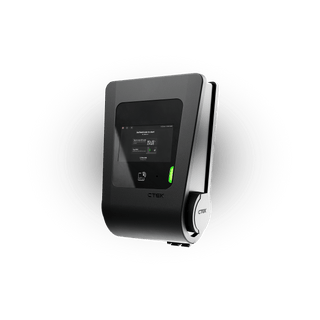
How advanced smart Electric Vehicle (EV) charging can benefit drivers, companies and the power grid was explored at a seminar CTEK took part in during Energimässan, Sweden's largest energy expo and conference.

Stefan Gabrielsson, CTEK Product Manager, participated in a panel discussion on smart charging which investigated why technology such as Vehicle to Grid (V2G) has not yet been implemented at scale.

By feeding energy from the EV battery to the grid, V2G can potentially help the grid manage peak demand and reduce bills for drivers and fleet operators.

Asked whether the technology of V2G is ready for more widespread adoption, Stefan said the development of smart charging had occurred in steps, firstly by controlling the charging current to protect a building's main fuse and later by managing the current to avoid or reduce exposure to peak electricity prices.

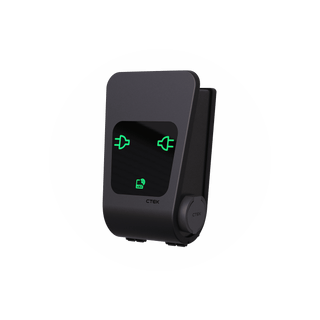
Stefan said the V2G standard is now available in the hardware – CTEK's CC3 and CC3i chargepoints are both V2G ready – but what is needed to enable its use is the service offers from the operators.

"From a technology perspective the potential is there," said Stefan, "now it is more about the offer for the end users to take part. Is it free parking for drivers in public car parks? Is it payments to companies with workplace parking? Is it money off bills for domestic consumers?"

Stefan was also asked which link in the chain from grid to charging operator to chargepoint to EV should be making the decision of when to start and stop V2G discharge.

Stefan said: "The worry is that if it's a simple signal from the grid the other loads in the EV chargepoint's installation, such as heat pump, might take up the newly available power with zero benefit for the grid.

"Instead, the control signal should go to a building's energy management system, which can coordinate the significant loads so there is real benefit for the grid. Such a system is more appropriate for and likely to be found in larger buildings. But the problem also exists for home charging."

Also on the panel at Energimässan were representatives of Volkswagen Group Sverige, Voltiva, E.ON Energidistribution and Checkwatt. They were asked by moderator Linda Thell Marklund, from Power Circle, what are the most important reasons why more advanced smart charging is not being implemented?

Stefan said: "Firstly, the technology standard is there for DC V2G and will follow soon for AC. The EV manufacturers need to enable V2G in their EVs in a more widespread and fully standardised way. Then it's about the offer to businesses and consumers being ready and being enticing and convincing."

Last year CTEK played a key role in a groundbreaking trial of V2G AC bidirectional charging using EVs from Volvo Cars which included eleven CC3 chargepoints at three locations in Gothenburg.

Volvo employees drove specially modified test cars (EX40 and C40 models) and series production cars (EX90) and plugged in when parked at one of the test site car parks equipped with the CC3 chargepoints.

The drivers did not have to initiate or direct V2G activity, that was determined by communications between the CC3, Volvo's backend and the energy provider. The test cars identified themselves to the CC3s using the Autocharge method.

More like this

CTEK’s EV charge points donated to hospital’s family house

CTEK is proud to be supporting the amazing work of the Ronald McDonald House at Huddinge, where families can stay when their children need healthcare at Karolinska University Hospital’s Astrid Lindgren's Children's Hospital.

CTEK’s EV charge points donated to hospital’s family house

Portable Battery Boosters: An Essential Tool for Today’s Drivers

Modern compact jump starters such as CTEK’s new RB3000 and RB4000, now available in the USA and Canada, provide confidence and a rapid restart to get you where you need to be when a dead battery could leave you stranded. For many drivers, a dead battery is still one of the most frustrating ways for a journey to grind to a halt – or not even begin. It can happen at home on a cold morning, in a supermarket car park, at a campsite, outside work or miles from immediate help. Traditionally, the answer was to keep a set of jumper cables in the trunk and hope that another vehicle – and a willing helper – was nearby. Today, there is a smarter, safer and more independent option: the portable battery booster. A portable battery booster is a compact jump starter designed to provide instant starting power to a vehicle with a discharged 12V battery. Instead of relying on another car, long cables and roadside guesswork, drivers can connect the booster directly to the battery, start the vehicle and get moving again in minutes. For modern motorists – whether they drive daily, travel for leisure, manage a work vehicle or simply want reassurance – this makes a booster one of the most practical emergency tools to keep on board. Why portable battery boosters matter Vehicles are more dependent on electrical systems than ever before. Infotainment, lighting, alarms, stop-start technology, dash cams, charging ports and comfort features all place demands on the battery. Add in short journeys, colder weather, periods of inactivity or an ageing battery, and even a well-maintained vehicle can fail to start – often at the worst possible time. Portable boosters avoid that risk. They are small enough to store in the trunk, glovebox, campervan locker or workshop kit, yet powerful enough to deliver the high burst of current needed to start a vehicle. Many also double as emergency power banks and include built-in lighting, making them useful well beyond the moment a battery fails. Key benefits for drivers Independence: A booster lets drivers restart a vehicle without waiting for another car, a neighbour, a colleague or a recovery service. Speed: In many situations, the process takes only a few minutes, helping drivers avoid delays and disruption. Safety: Quality boosters use protection features such as spark-proof and reverse polarity protection, reducing the risk of mistakes during stressful roadside moments. Portability: Modern units are compact, lightweight and easy to store, so they can travel with the vehicle instead of sitting in a garage. Multi-purpose value: USB charging ports and LED lights turn many boosters into practical emergency power sources for phones, tablets, lighting and other essentials. When to boost Portable battery boosters are particularly useful for daily drivers who make frequent short trips, as batteries may not always have enough time to recharge fully. They are equally valuable for families heading away on holiday, tradespeople who rely on their vans, drivers of older vehicles, motorhome and campervan owners, boating enthusiasts, fleet operators and anyone who parks in areas where another vehicle may not be available for a jump start. They also come into their own in seasonal conditions. Cold weather can reduce battery performance, while long periods of inactivity can leave vehicles struggling to start. A booster provides a simple safeguard before an early commute, a weekend trip, a school run or an important appointment turns into an avoidable problem. Why boosters are smarter than jumper cables Jumper cables depend on circumstances drivers cannot always control. You need access to another vehicle, enough room to position both vehicles safely, someone willing to help and the confidence to connect the cables correctly. That is not always realistic on a busy roadside, in a dark car park, on a remote site or when parked nose-in against a wall. A portable booster removes much of that uncertainty. It is self-contained, immediately available and designed specifically for the job. With modern safety protections, clear indicators and compact storage, it gives drivers a more controlled and user-friendly way to deal with a dead battery. Instead of depending on luck, they can carry their own solution. CTEK RB3000 and RB4000: premium reassurance The new CTEK RB3000 and RB4000 battery boosters are designed in Sweden, and now available in the US and Canada, for drivers who want more than a basic emergency accessory. They position portable boosting as part of a complete approach to vehicle readiness: dependable starting power, practical safety features, useful everyday charging capability and the peace of mind associated with a specialist battery-care brand. The RB3000 powers up to 30 starts on a single charge whilst the RB4000 provides up to 45 starts. Once charged up, that power is long-lasting: both CTEK boosters hold power for up to six months, ensuring readiness whenever it’s needed. Both models reflect what modern drivers increasingly expect from emergency equipment: compact design, quick setup, clear usability, robust safety thinking and additional functionality that makes the unit useful even when the car starts first time. In short, they are not just jump starters; they are confidence tools. Peace of mind in the trunk No driver plans for a dead battery, but every driver can prepare for one. A portable battery booster turns an inconvenient breakdown into a manageable pause, helping people get back on the road quickly and safely. For motorists who value reliability, independence and practical preparedness, the CTEK RB3000 and RB4000 offer premium solutions that make sense before the problem happens – not after.

Portable Battery Boosters: An Essential Tool for Today’s Drivers

CTEK RB 3000 and RB 4000 boosters now available in North America

October 06 2026 — CTEK has announced that its RB 3000 and RB 4000 portable boosters are now available in North America. Already well received in Europe and Australia, the two models bring powerful jump-starting capability and practical everyday features to drivers across the region.

CTEK RB 3000 and RB 4000 boosters now available in North America - CTEK

Charge, Boost, Stay Ready: Five Simple Ways to Avoid a Flat Battery

Charging a car battery regularly, recognising the early signs of low charge and carrying a compatible booster can overcome the risks of a flat battery. On Charge Your Car Day 2026, these five practical steps explain how chargers and boosters work together to help drivers stay ready.

Charge, Boost, Stay Ready: Five Simple Ways to Avoid a Flat Battery - CTEK

Why Short Journeys Could Be Slowly Draining Your Battery

If you are asking “why won't my car start?”, repeated short journeys may be part of the answer. Each start uses a large burst of battery power, and brief drives may not give the vehicle enough time to replace it. Regular charging can help prevent a gradual loss of charge. This Charge Your Car Day on 5th October, learn how to Stay Ready.

Why Short Journeys Could Be Slowly Draining Your Battery - CTEK

150 Drains on Your Battery – Are You and Your Vehicle Ready?

Charge Your Car Day is on 5th October and encourages drivers to check, charge and protect their vehicle’s 12V battery. With modern cars relying on up to 150 electrically powered features that consume energy, regular battery care and access to a booster can help motorists stay ready for all the journeys that matter.

150 Drains on Your Battery – Are You and Your Vehicle Ready? - CTEK