Back to Blog Back to top

BMW 550e Charges by 3-phase with NJORD GO: PHEVs Now Approaching BEV Charge Rates

10 June 2024

The new BMW 550e charges at 3-phase 11A (7.4 kW) via AC charging, bringing a new level of convenience and efficiency to plug-in hybrid electric vehicle (PHEV) owners. This charging rate is twice as fast as the standard PHEV with a 1-phase 16A (3.7 kW) charge rate. This advancement allows PHEVs to charge almost as quickly and efficiently as battery electric vehicles (BEVs), transforming home and destination charging. How does this innovative solution make everyday life easier for PHEV drivers? Let’s explore through the experience of Sasa, a BMW workshop manager in Sweden. 

A Personal Experience with the BMW 550e 

Sasa, a BMW workshop manager with extensive experience using CTEK products for maintaining 12V batteries, recently upgraded his home EV charging setup to accommodate his new BMW 550e. He previously used a charger from another brand connected via 3-phase CEE, but it lacked load balancing features and app functionality. This deficiency often tripped the house's main fuses whenever the car demanded 11A on three phases, especially with a total main fuse capacity of only 20A. 

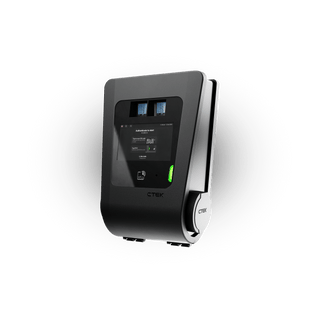
With common household appliances like induction stoves, kettles, and dryers potentially running at the same time, the previous setup was impractical. Sasa’s solution was to install the CTEK NJORD GO combined with the NANOGRID AIR wireless dynamic load balancing system. This setup connects via the HAN port on the house's electricity meter and integrates into the home network via Wi-Fi, ensuring safe and efficient charging without overloading the electrical system. 

Advanced Charging for Modern PHEVs 

The BMW 550e, equipped with 3-phase 11A (7,4kW) charging capability, bridges the gap between PHEVs and full electric vehicles. PHEVs traditionally lagged behind EVs in charging speed, but with the new BMW 550e and NJORD GO, this is no longer the case. The NJORD GO, a versatile and powerful EVSE ensures the 550e charges efficiently and quickly through AC charging. 

Key Features of the BMW 550e (2024 Model) 

The 2024 BMW 550e comes with several impressive features: 

  • Battery Size: Equipped with a 19.4 kWh HV battery. 
  • Electric Range: Offers an electric-only range of up to 87 kilometres (54 miles) on a full charge, ideal for daily commuting and short trips. 
  • Hybrid Powertrain: Combines a powerful internal combustion engine with an electric motor, providing a total system output of 489 horsepower. 
  • Interior and Technology: Features a luxurious interior with advanced technology, including the latest iDrive system, a large touchscreen display, and various driver assistance features. 
  • Performance: Accelerates from 0 to 100 km/h in just under 4,3 seconds, ensuring a dynamic driving experience. 
  • The car does not have an alternator, which saves weight and manufacturing costs, and reduces power losses associated with running an alternator. Additionally, it leads to decreased maintenance over time since the alternator is an expensive component. 

12V Battery System in the BMW 550e 

The BMW 550e xDrive, like other modern hybrid and electric vehicles, uses a DC-DC converter to charge the 12V battery from the high-voltage hybrid battery system. This approach eliminates the need for a traditional alternator, typically found in conventional gasoline or diesel-powered vehicles. The DC-DC converter transforms high-voltage energy from the main battery pack into the lower voltage required to charge the 12V battery and power the car's 12V systems, such as lights, infotainment, and other accessories. The NJORD GO charges the main high-voltage battery, which then charges the 12V battery through the DC-DC converter. 

This design ensures that even if the high-voltage battery is depleted, the 12V system remains operational until the car can be recharged. The absence of a traditional alternator simplifies the vehicle's design and improves efficiency by eliminating the need to convert mechanical energy from an internal combustion engine into electrical energy for the 12V system. Instead, the car directly uses electrical energy from the main battery through the DC-DC converter. 

Real-World Benefits: Sasa's Experience 

Imagine the convenience of charging your PHEV without worrying about overloading your home’s electrical system. This is now possible thanks to the NANOGRID AIR, which communicates wirelessly with the NJORD GO to balance the load and prevent system overloads. This setup allows the use of household appliances simultaneously without tripping the main fuses, a common concern for many PHEV/EV owners. 

One of the other features of the CTEK setup is the ability to schedule charging sessions through a user-friendly app. This allows Sasa to take advantage of off-peak electricity rates, significantly reducing charging costs. The app also lets him adjust the power output, making it easier to manage electricity consumption and prepare for future demand tariffs. 

The Future of PHEVs and EVs 

While the BMW 550e showcases the potential of advanced PHEVs, it’s important to note that battery electric vehicles (BEVs) most likely represent the future of sustainable transportation. BEVs offer greater potential for zero-emission driving and are becoming more accessible as technology and infrastructure improve. However, innovations like the NJORD GO and NANOGRID AIR are crucial in bridging the gap and providing immediate benefits to PHEV owners. 

Sasa’s experience with the BMW 550e and CTEK’s NJORD GO and NANOGRID AIR highlights the potential of modern PHEVs to meet the demands of today’s drivers. By leveraging advanced charging technology and load balancing solutions, PHEVs can now charge almost as efficiently and safely as full EVs. This not only enhances the convenience of owning a PHEV but also underscores the importance of investing in reliable, future proofed and innovative charging solutions. 

As more drivers like Sasa discover the benefits of these advancements, it's clear that the line between PHEVs and full EVs is becoming increasingly blurred, paving the way for a more sustainable and flexible automotive future. 

More like this

CTEK’s EV charge points donated to hospital’s family house

CTEK is proud to be supporting the amazing work of the Ronald McDonald House at Huddinge, where families can stay when their children need healthcare at Karolinska University Hospital’s Astrid Lindgren's Children's Hospital.

CTEK’s EV charge points donated to hospital’s family house

Portable Battery Boosters: An Essential Tool for Today’s Drivers

Modern compact jump starters such as CTEK’s new RB3000 and RB4000, now available in the USA and Canada, provide confidence and a rapid restart to get you where you need to be when a dead battery could leave you stranded. For many drivers, a dead battery is still one of the most frustrating ways for a journey to grind to a halt – or not even begin. It can happen at home on a cold morning, in a supermarket car park, at a campsite, outside work or miles from immediate help. Traditionally, the answer was to keep a set of jumper cables in the trunk and hope that another vehicle – and a willing helper – was nearby. Today, there is a smarter, safer and more independent option: the portable battery booster. A portable battery booster is a compact jump starter designed to provide instant starting power to a vehicle with a discharged 12V battery. Instead of relying on another car, long cables and roadside guesswork, drivers can connect the booster directly to the battery, start the vehicle and get moving again in minutes. For modern motorists – whether they drive daily, travel for leisure, manage a work vehicle or simply want reassurance – this makes a booster one of the most practical emergency tools to keep on board. Why portable battery boosters matter Vehicles are more dependent on electrical systems than ever before. Infotainment, lighting, alarms, stop-start technology, dash cams, charging ports and comfort features all place demands on the battery. Add in short journeys, colder weather, periods of inactivity or an ageing battery, and even a well-maintained vehicle can fail to start – often at the worst possible time. Portable boosters avoid that risk. They are small enough to store in the trunk, glovebox, campervan locker or workshop kit, yet powerful enough to deliver the high burst of current needed to start a vehicle. Many also double as emergency power banks and include built-in lighting, making them useful well beyond the moment a battery fails. Key benefits for drivers Independence: A booster lets drivers restart a vehicle without waiting for another car, a neighbour, a colleague or a recovery service. Speed: In many situations, the process takes only a few minutes, helping drivers avoid delays and disruption. Safety: Quality boosters use protection features such as spark-proof and reverse polarity protection, reducing the risk of mistakes during stressful roadside moments. Portability: Modern units are compact, lightweight and easy to store, so they can travel with the vehicle instead of sitting in a garage. Multi-purpose value: USB charging ports and LED lights turn many boosters into practical emergency power sources for phones, tablets, lighting and other essentials. When to boost Portable battery boosters are particularly useful for daily drivers who make frequent short trips, as batteries may not always have enough time to recharge fully. They are equally valuable for families heading away on holiday, tradespeople who rely on their vans, drivers of older vehicles, motorhome and campervan owners, boating enthusiasts, fleet operators and anyone who parks in areas where another vehicle may not be available for a jump start. They also come into their own in seasonal conditions. Cold weather can reduce battery performance, while long periods of inactivity can leave vehicles struggling to start. A booster provides a simple safeguard before an early commute, a weekend trip, a school run or an important appointment turns into an avoidable problem. Why boosters are smarter than jumper cables Jumper cables depend on circumstances drivers cannot always control. You need access to another vehicle, enough room to position both vehicles safely, someone willing to help and the confidence to connect the cables correctly. That is not always realistic on a busy roadside, in a dark car park, on a remote site or when parked nose-in against a wall. A portable booster removes much of that uncertainty. It is self-contained, immediately available and designed specifically for the job. With modern safety protections, clear indicators and compact storage, it gives drivers a more controlled and user-friendly way to deal with a dead battery. Instead of depending on luck, they can carry their own solution. CTEK RB3000 and RB4000: premium reassurance The new CTEK RB3000 and RB4000 battery boosters are designed in Sweden, and now available in the US and Canada, for drivers who want more than a basic emergency accessory. They position portable boosting as part of a complete approach to vehicle readiness: dependable starting power, practical safety features, useful everyday charging capability and the peace of mind associated with a specialist battery-care brand. The RB3000 powers up to 30 starts on a single charge whilst the RB4000 provides up to 45 starts. Once charged up, that power is long-lasting: both CTEK boosters hold power for up to six months, ensuring readiness whenever it’s needed. Both models reflect what modern drivers increasingly expect from emergency equipment: compact design, quick setup, clear usability, robust safety thinking and additional functionality that makes the unit useful even when the car starts first time. In short, they are not just jump starters; they are confidence tools. Peace of mind in the trunk No driver plans for a dead battery, but every driver can prepare for one. A portable battery booster turns an inconvenient breakdown into a manageable pause, helping people get back on the road quickly and safely. For motorists who value reliability, independence and practical preparedness, the CTEK RB3000 and RB4000 offer premium solutions that make sense before the problem happens – not after.

Portable Battery Boosters: An Essential Tool for Today’s Drivers

CTEK RB 3000 and RB 4000 boosters now available in North America

October 06 2026 — CTEK has announced that its RB 3000 and RB 4000 portable boosters are now available in North America. Already well received in Europe and Australia, the two models bring powerful jump-starting capability and practical everyday features to drivers across the region.

CTEK RB 3000 and RB 4000 boosters now available in North America - CTEK

Charge, Boost, Stay Ready: Five Simple Ways to Avoid a Flat Battery

Charging a car battery regularly, recognising the early signs of low charge and carrying a compatible booster can overcome the risks of a flat battery. On Charge Your Car Day 2026, these five practical steps explain how chargers and boosters work together to help drivers stay ready.

Charge, Boost, Stay Ready: Five Simple Ways to Avoid a Flat Battery - CTEK

Why Short Journeys Could Be Slowly Draining Your Battery

If you are asking “why won't my car start?”, repeated short journeys may be part of the answer. Each start uses a large burst of battery power, and brief drives may not give the vehicle enough time to replace it. Regular charging can help prevent a gradual loss of charge. This Charge Your Car Day on 5th October, learn how to Stay Ready.

Why Short Journeys Could Be Slowly Draining Your Battery - CTEK

150 Drains on Your Battery – Are You and Your Vehicle Ready?

Charge Your Car Day is on 5th October and encourages drivers to check, charge and protect their vehicle’s 12V battery. With modern cars relying on up to 150 electrically powered features that consume energy, regular battery care and access to a booster can help motorists stay ready for all the journeys that matter.

150 Drains on Your Battery – Are You and Your Vehicle Ready? - CTEK