Back to Blog Back to top

Wie Flottenvorteile die Einführung von Elektrofahrzeugen in ganz Europa vorantreiben

18 June 2025

Firmenflotten treiben den Übergang zu Elektrofahrzeugen (EV) in Europa still und leise voran. Während Verbraucherzuschüsse und auffällige neue Modelle oft die Schlagzeilen dominieren, sind es Firmenwagen – begünstigt durch intelligente Steuerregelungen und Arbeitgebervergünstigungen –, die in mehreren europäischen Ländern den Großteil des EV-Absatzes ausmachen.

Flotten geben den Ton an

In Belgien waren Flottenkäufer für den Großteil der Neuzulassungen von Elektrofahrzeugen im Jahr 2024 verantwortlich. Von den 276.000 zugelassenen Personenkraftwagen waren 40 % der Firmenfahrzeuge vollelektrisch, verglichen mit nur 10 % bei privaten Käufern. Noch beeindruckender ist, dass 87 % aller neuen BEVs (batteriebetriebene Elektrofahrzeuge) von Unternehmen und nicht von Privatpersonen zugelassen wurden1.

Diese Zahlen sind keine Ausnahme. EU-weit machen Unternehmensflotten und Leasingfirmen etwa 60 % aller Neuwagenverkäufe aus, wobei der Anteil bei Elektrofahrzeugen noch höher liegt2.

Nationale Flotten-Highlights

Schweden

Schweden bleibt in der Nordregion führend bei der Elektrifizierung von Flotten. Im Jahr 2024 waren mehr als 60 % der neuen Firmenwagen Plug-in-Hybride, wobei BEVs rasch Marktanteile gewannen, da Steuervergünstigungen und Arbeitgeberprogramme zunehmend emissionsfreie Modelle begünstigen. Beliebte Arbeitgeberangebote umfassen gebündelte Lademöglichkeiten zu Hause oder am Arbeitsplatz, was den Komfort und die Nutzung steigert. Firmenflotten sind die Hauptquelle für das BEV-Wachstum auf dem schwedischen Privatmarkt, da ehemalige Flottenfahrzeuge in den Gebrauchtwagenmarkt gelangen.

Deutschland

Trotz eines holprigen Jahres 2024 aufgrund von Kürzungen bei den EV-Förderungen bleibt das Unternehmenssegment in Deutschland robust. Im ersten Quartal 2025 entfielen über 70 % der BEV-Zulassungen auf Firmen- oder Leasingflotten, darunter Elektrofahrzeuge von Luxusmarken und Tesla-Modelle. Dies ist auf eine günstige steuerliche Behandlung zurückzuführen: Firmen-EVs profitieren im Vergleich zu Benzin- oder Dieselfahrzeugen von einem reduzierten Steuerwert („monetärer Vorteil“), wodurch die monatlichen Kosten für die Mitarbeiter niedrig bleiben.

Vereinigtes Königreich

Flottenanreize verändern die Verbreitung von Elektrofahrzeugen im Vereinigten Königreich. Mehr als 80 % der 2023/24 verkauften BEVs wurden auf Flottenkunden zugelassen, dank extrem niedriger Steuersätze für geldwerte Vorteile (Benefit-in-Kind, BIK) – nur 2 % für BEVs gegenüber 25–35 % für Fahrzeuge mit Verbrennungsmotor. Im selben Jahr stieg die Zahl der Mitarbeiter mit Firmenwagen auf 840.000, was einem Anstieg von 10,5 % entspricht³. Viele Unternehmen bieten EV-Programme mit Gehaltsverzicht an, die Versicherung, Wartung und Aufladung abdecken, wodurch elektrische Firmenwagen kostengünstig und attraktiv werden.

EU insgesamt

In ganz Europa übertrifft die Akzeptanz von Elektrofahrzeugen bei Unternehmen die der Verbraucher. In den Niederlanden, Dänemark und Belgien machen Flotten den Großteil der neuen BEVs aus. PHEVs sind in Flotten nach wie vor weit verbreitet – sie machen bis zu 42 % der Plug-in-Zulassungen aus –, obwohl die Politik nun einen Übergang zu BEVs fordert, um die CO2-Ziele zu erreichen.

Warum Flotten wichtig sind

Eine Studie von Transport & Environment ergab, dass ein jährlicher Steueranreiz von 1.000 € für Firmenwagen den Absatz von BEVs um 17–40 % und den von PHEVs um bis zu 90 % steigert2. Es ist offensichtlich, dass die Struktur der Unternehmensanreize einen erheblichen Einfluss darauf hat, welche Fahrzeugtypen auf die Straße kommen.

Vorteile für Unternehmen:

  • Geringere Betriebskosten: Reduzierte Ausgaben für Kraftstoff und Wartung senken die Gesamtbetriebskosten
  • Ökologische Vorteile: Unternehmen können CO₂-Ziele erreichen und ihre ESG-Bewertungen verbessern
  • Steuereffizienz: Viele Länder bieten erhebliche steuerliche Abschreibungsmöglichkeiten für Arbeitgeber bei Elektroflotten

Vorteile für Mitarbeiter:

  • Geringe Steuerbelastung: Günstige BIK-Strukturen ermöglichen es Mitarbeitern, Premium-Elektrofahrzeuge zu niedrigeren monatlichen Kosten zu fahren
  • Minimaler Aufwand: Der Zugang zu Elektrofahrzeugen über Leasing, Gehaltsverzicht oder All-in-Firmenprogramme beseitigt Kosten- und Risikohürden
  • Erfahrung schafft Vertrauen: Der tägliche Einsatz von Elektrofahrzeugen am Arbeitsplatz weckt das Interesse am privaten Besitz

Aufladen macht es möglich: Hier kommt der CTEK CC3 ins Spiel

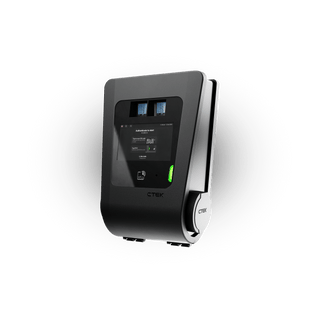
Keine Flotte ist komplett ohne die richtige Ladeinfrastruktur. Hier kommt der CTEK CC3 ins Spiel – ein Ladegerät für den Arbeitsplatz, das auf Zuverlässigkeit, Skalierbarkeit und intelligentes Management ausgelegt ist.

Der CTEK CC3 bietet:

  • Flexible Leistung (bis zu 22 kW pro Steckdose)
  • Intelligenter Lastausgleich durch NANOGRID-Technologie
  • OCPP 2.0.1-Kompatibilität für nahtlose Backend-Integration
  • Robustes, modulares Design, geeignet für gewerbliche Umgebungen

Das CC3, das bereits als Finalist bei den EVIE Awards 2024 in der Kategorie „Bestes neues Produkt“ nominiert ist, hilft Unternehmen dabei, die Elektrifizierung in die Praxis umzusetzen. Es ermöglicht Mitarbeitern, am Arbeitsplatz effizient aufzuladen – was die Reichweitenangst verringert und den täglichen Gebrauch unterstützt.

Fazit

Die Elektrifizierung von Fuhrparks ist ein entscheidender Weg bei der Umstellung auf Elektrofahrzeuge in Europa. Mit den richtigen steuerlichen Rahmenbedingungen, Anreizen für Mitarbeiter und Ladeinfrastruktur wie dem CTEK CC3 modernisieren Unternehmen nicht nur ihre Mobilität – sie gestalten die Zukunft des nachhaltigen Verkehrs.

Ähnliche Artikel

CTEK’s EV charge points donated to hospital’s family house

CTEK is proud to be supporting the amazing work of the Ronald McDonald House at Huddinge, where families can stay when their children need healthcare at Karolinska University Hospital’s Astrid Lindgren's Children's Hospital.

CTEK’s EV charge points donated to hospital’s family house

Portable Battery Boosters: An Essential Tool for Today’s Drivers

Modern compact jump starters such as CTEK’s new RB3000 and RB4000, now available in the USA and Canada, provide confidence and a rapid restart to get you where you need to be when a dead battery could leave you stranded. For many drivers, a dead battery is still one of the most frustrating ways for a journey to grind to a halt – or not even begin. It can happen at home on a cold morning, in a supermarket car park, at a campsite, outside work or miles from immediate help. Traditionally, the answer was to keep a set of jumper cables in the trunk and hope that another vehicle – and a willing helper – was nearby. Today, there is a smarter, safer and more independent option: the portable battery booster. A portable battery booster is a compact jump starter designed to provide instant starting power to a vehicle with a discharged 12V battery. Instead of relying on another car, long cables and roadside guesswork, drivers can connect the booster directly to the battery, start the vehicle and get moving again in minutes. For modern motorists – whether they drive daily, travel for leisure, manage a work vehicle or simply want reassurance – this makes a booster one of the most practical emergency tools to keep on board. Why portable battery boosters matter Vehicles are more dependent on electrical systems than ever before. Infotainment, lighting, alarms, stop-start technology, dash cams, charging ports and comfort features all place demands on the battery. Add in short journeys, colder weather, periods of inactivity or an ageing battery, and even a well-maintained vehicle can fail to start – often at the worst possible time. Portable boosters avoid that risk. They are small enough to store in the trunk, glovebox, campervan locker or workshop kit, yet powerful enough to deliver the high burst of current needed to start a vehicle. Many also double as emergency power banks and include built-in lighting, making them useful well beyond the moment a battery fails. Key benefits for drivers Independence: A booster lets drivers restart a vehicle without waiting for another car, a neighbour, a colleague or a recovery service. Speed: In many situations, the process takes only a few minutes, helping drivers avoid delays and disruption. Safety: Quality boosters use protection features such as spark-proof and reverse polarity protection, reducing the risk of mistakes during stressful roadside moments. Portability: Modern units are compact, lightweight and easy to store, so they can travel with the vehicle instead of sitting in a garage. Multi-purpose value: USB charging ports and LED lights turn many boosters into practical emergency power sources for phones, tablets, lighting and other essentials. When to boost Portable battery boosters are particularly useful for daily drivers who make frequent short trips, as batteries may not always have enough time to recharge fully. They are equally valuable for families heading away on holiday, tradespeople who rely on their vans, drivers of older vehicles, motorhome and campervan owners, boating enthusiasts, fleet operators and anyone who parks in areas where another vehicle may not be available for a jump start. They also come into their own in seasonal conditions. Cold weather can reduce battery performance, while long periods of inactivity can leave vehicles struggling to start. A booster provides a simple safeguard before an early commute, a weekend trip, a school run or an important appointment turns into an avoidable problem. Why boosters are smarter than jumper cables Jumper cables depend on circumstances drivers cannot always control. You need access to another vehicle, enough room to position both vehicles safely, someone willing to help and the confidence to connect the cables correctly. That is not always realistic on a busy roadside, in a dark car park, on a remote site or when parked nose-in against a wall. A portable booster removes much of that uncertainty. It is self-contained, immediately available and designed specifically for the job. With modern safety protections, clear indicators and compact storage, it gives drivers a more controlled and user-friendly way to deal with a dead battery. Instead of depending on luck, they can carry their own solution. CTEK RB3000 and RB4000: premium reassurance The new CTEK RB3000 and RB4000 battery boosters are designed in Sweden, and now available in the US and Canada, for drivers who want more than a basic emergency accessory. They position portable boosting as part of a complete approach to vehicle readiness: dependable starting power, practical safety features, useful everyday charging capability and the peace of mind associated with a specialist battery-care brand. The RB3000 powers up to 30 starts on a single charge whilst the RB4000 provides up to 45 starts. Once charged up, that power is long-lasting: both CTEK boosters hold power for up to six months, ensuring readiness whenever it’s needed. Both models reflect what modern drivers increasingly expect from emergency equipment: compact design, quick setup, clear usability, robust safety thinking and additional functionality that makes the unit useful even when the car starts first time. In short, they are not just jump starters; they are confidence tools. Peace of mind in the trunk No driver plans for a dead battery, but every driver can prepare for one. A portable battery booster turns an inconvenient breakdown into a manageable pause, helping people get back on the road quickly and safely. For motorists who value reliability, independence and practical preparedness, the CTEK RB3000 and RB4000 offer premium solutions that make sense before the problem happens – not after.

Portable Battery Boosters: An Essential Tool for Today’s Drivers

CTEK RB 3000 and RB 4000 boosters now available in North America

October 06 2026 — CTEK has announced that its RB 3000 and RB 4000 portable boosters are now available in North America. Already well received in Europe and Australia, the two models bring powerful jump-starting capability and practical everyday features to drivers across the region.

CTEK RB 3000 and RB 4000 boosters now available in North America - CTEK

Charge, Boost, Stay Ready: Five Simple Ways to Avoid a Flat Battery

Charging a car battery regularly, recognising the early signs of low charge and carrying a compatible booster can overcome the risks of a flat battery. On Charge Your Car Day 2026, these five practical steps explain how chargers and boosters work together to help drivers stay ready.

Charge, Boost, Stay Ready: Five Simple Ways to Avoid a Flat Battery - CTEK

Why Short Journeys Could Be Slowly Draining Your Battery

If you are asking “why won't my car start?”, repeated short journeys may be part of the answer. Each start uses a large burst of battery power, and brief drives may not give the vehicle enough time to replace it. Regular charging can help prevent a gradual loss of charge. This Charge Your Car Day on 5th October, learn how to Stay Ready.

Why Short Journeys Could Be Slowly Draining Your Battery - CTEK

150 Drains on Your Battery – Are You and Your Vehicle Ready?

Charge Your Car Day is on 5th October and encourages drivers to check, charge and protect their vehicle’s 12V battery. With modern cars relying on up to 150 electrically powered features that consume energy, regular battery care and access to a booster can help motorists stay ready for all the journeys that matter.

150 Drains on Your Battery – Are You and Your Vehicle Ready? - CTEK