19 november 2024

Klockan tickar ned mot nya EU-omfattande regler för tillhandahållande av laddning för elbilar på kommersiella parkeringsplatser.

Från och med den 1 januari 2025 träder EU-direktivet om laddpunkter på parkeringsplatser i kraft, med nya krav för destinationer som har parkeringsplatser med ett visst antal platser över en viss gräns. De nya reglerna är en del av det bredare direktivet om byggnaders energiprestanda (EPBD), som fokuserar på icke-bostadshus med parkeringsplatser.

Vissa parkeringsplatsägare eller tredjepartsoperatörer kan redan ha infört laddning för elbilar. I vissa av dessa fall kommer deras befintliga laddningsutrustning att vara lika med eller överträffa de nya kraven. Men många sådana parkeringsplatser har ännu ingen laddning för elbilar, eller inte tillräckligt för att uppfylla de nya EU-kraven.

CTEK rekommenderar alla parkeringsplatsägare och operatörer att bekanta sig med de nya reglerna och, om nödvändigt, ha en handlingsplan för vad som återstår av 2024. Dessa nya regler är en vidareutveckling av lagstiftning som infördes 2021, som krävde att alla nybyggda bostadshus med fler än tio parkeringsplatser skulle förberedas för laddningsinfrastruktur.

Nu måste icke-bostadshus med fler än 20 parkeringsplatser – såsom köpcentrum, sportarenor, fritidsanläggningar, transportnav och andra besöksmål – ha installerat minst en laddpunkt senast den 1 januari 2025.

Dessutom måste infrastrukturen för att möjliggöra fler laddpunkter – inklusive kabelkanaler och rör – vara på plats och kunna stödja framtida laddpunktsinstallationer för var femte plats på parkeringsplatsen.

Genomförandet av de nya 2025-reglerna bygger på befintliga krav för parkeringsplatser i andra scenarier. Enligt direktivet måste alla bostadshus som är nybyggda eller genomgår omfattande renovering och som har minst tio parkeringsplatser ha både en laddpunkt och infrastrukturen för att möjliggöra installation av laddpunkter för varje plats. Dessa regler gäller för bostadsrättsföreningar och hyresfastigheter, inte enskilda husägare.

Och nya kommersiella byggnader med minst tio platser på sin parkeringsplats måste också ha minst en laddpunkt för elbilar, plus infrastrukturen för minst var femte plats. Och mer är på gång…

När man planerar installation av laddpunkter för elbilar och infrastrukturen för utbyggnad, bör ägarna av alla icke-bostadshus med fler än 20 parkeringsplatser också ha ett öga på den 1 januari 2027, då kraven kommer att ökas till att var tionde plats har laddning och 50 procent av alla platser har den förberedande infrastrukturen på plats för framtida laddningsinstallationer.

CTEK rekommenderar att man har ett långsiktigt perspektiv när man planerar och installerar laddningsutrustning för elbilar på parkeringsplatser. Att investera i framtidssäkra lösningar nu kommer att vara mer kostnadseffektivt på lång sikt, vilket säkerställer att din infrastruktur enkelt kan hantera framtida utbyggnader när efterfrågan växer.

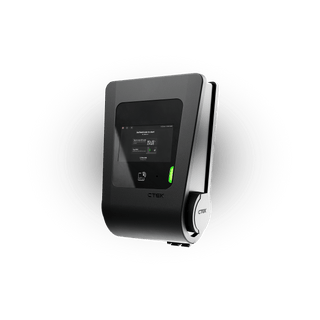
Och att installera framtidssäkrade laddpunkter nu, som CTEK:s nya CC3, kommer att göra det möjligt för operatörer, och deras elbilsförare, att dra nytta av nästa generationer av smarta laddningsmöjligheter.

”Dessa nya regler kommer att avsevärt öka antagandet av elbilar genom att göra laddningsinfrastrukturen mer utbredd”, säger Daniel Forsberg, Marketing Manager EVSE.

”När installationerna av laddningsutrustning ökar kan vi förvänta oss en motsvarande ökning av elbilsägandet, vilket bidrar till mer hållbara och miljövänliga resor. Denna tillväxt kommer att driva framsteg inom båda sektorerna, vilket gör elfordon till ett bekvämare och mer attraktivt alternativ för fler människor.”

Mer likt det här

CTEK’s EV charge points donated to hospital’s family house

CTEK is proud to be supporting the amazing work of the Ronald McDonald House at Huddinge, where families can stay when their children need healthcare at Karolinska University Hospital’s Astrid Lindgren's Children's Hospital.

CTEK’s EV charge points donated to hospital’s family house

Portable Battery Boosters: An Essential Tool for Today’s Drivers

Modern compact jump starters such as CTEK’s new RB3000 and RB4000, now available in the USA and Canada, provide confidence and a rapid restart to get you where you need to be when a dead battery could leave you stranded. For many drivers, a dead battery is still one of the most frustrating ways for a journey to grind to a halt – or not even begin. It can happen at home on a cold morning, in a supermarket car park, at a campsite, outside work or miles from immediate help. Traditionally, the answer was to keep a set of jumper cables in the trunk and hope that another vehicle – and a willing helper – was nearby. Today, there is a smarter, safer and more independent option: the portable battery booster. A portable battery booster is a compact jump starter designed to provide instant starting power to a vehicle with a discharged 12V battery. Instead of relying on another car, long cables and roadside guesswork, drivers can connect the booster directly to the battery, start the vehicle and get moving again in minutes. For modern motorists – whether they drive daily, travel for leisure, manage a work vehicle or simply want reassurance – this makes a booster one of the most practical emergency tools to keep on board. Why portable battery boosters matter Vehicles are more dependent on electrical systems than ever before. Infotainment, lighting, alarms, stop-start technology, dash cams, charging ports and comfort features all place demands on the battery. Add in short journeys, colder weather, periods of inactivity or an ageing battery, and even a well-maintained vehicle can fail to start – often at the worst possible time. Portable boosters avoid that risk. They are small enough to store in the trunk, glovebox, campervan locker or workshop kit, yet powerful enough to deliver the high burst of current needed to start a vehicle. Many also double as emergency power banks and include built-in lighting, making them useful well beyond the moment a battery fails. Key benefits for drivers Independence: A booster lets drivers restart a vehicle without waiting for another car, a neighbour, a colleague or a recovery service. Speed: In many situations, the process takes only a few minutes, helping drivers avoid delays and disruption. Safety: Quality boosters use protection features such as spark-proof and reverse polarity protection, reducing the risk of mistakes during stressful roadside moments. Portability: Modern units are compact, lightweight and easy to store, so they can travel with the vehicle instead of sitting in a garage. Multi-purpose value: USB charging ports and LED lights turn many boosters into practical emergency power sources for phones, tablets, lighting and other essentials. When to boost Portable battery boosters are particularly useful for daily drivers who make frequent short trips, as batteries may not always have enough time to recharge fully. They are equally valuable for families heading away on holiday, tradespeople who rely on their vans, drivers of older vehicles, motorhome and campervan owners, boating enthusiasts, fleet operators and anyone who parks in areas where another vehicle may not be available for a jump start. They also come into their own in seasonal conditions. Cold weather can reduce battery performance, while long periods of inactivity can leave vehicles struggling to start. A booster provides a simple safeguard before an early commute, a weekend trip, a school run or an important appointment turns into an avoidable problem. Why boosters are smarter than jumper cables Jumper cables depend on circumstances drivers cannot always control. You need access to another vehicle, enough room to position both vehicles safely, someone willing to help and the confidence to connect the cables correctly. That is not always realistic on a busy roadside, in a dark car park, on a remote site or when parked nose-in against a wall. A portable booster removes much of that uncertainty. It is self-contained, immediately available and designed specifically for the job. With modern safety protections, clear indicators and compact storage, it gives drivers a more controlled and user-friendly way to deal with a dead battery. Instead of depending on luck, they can carry their own solution. CTEK RB3000 and RB4000: premium reassurance The new CTEK RB3000 and RB4000 battery boosters are designed in Sweden, and now available in the US and Canada, for drivers who want more than a basic emergency accessory. They position portable boosting as part of a complete approach to vehicle readiness: dependable starting power, practical safety features, useful everyday charging capability and the peace of mind associated with a specialist battery-care brand. The RB3000 powers up to 30 starts on a single charge whilst the RB4000 provides up to 45 starts. Once charged up, that power is long-lasting: both CTEK boosters hold power for up to six months, ensuring readiness whenever it’s needed. Both models reflect what modern drivers increasingly expect from emergency equipment: compact design, quick setup, clear usability, robust safety thinking and additional functionality that makes the unit useful even when the car starts first time. In short, they are not just jump starters; they are confidence tools. Peace of mind in the trunk No driver plans for a dead battery, but every driver can prepare for one. A portable battery booster turns an inconvenient breakdown into a manageable pause, helping people get back on the road quickly and safely. For motorists who value reliability, independence and practical preparedness, the CTEK RB3000 and RB4000 offer premium solutions that make sense before the problem happens – not after.

Portable Battery Boosters: An Essential Tool for Today’s Drivers

CTEK RB 3000 and RB 4000 boosters now available in North America

October 06 2026 — CTEK has announced that its RB 3000 and RB 4000 portable boosters are now available in North America. Already well received in Europe and Australia, the two models bring powerful jump-starting capability and practical everyday features to drivers across the region.

CTEK RB 3000 and RB 4000 boosters now available in North America - CTEK

Charge, Boost, Stay Ready: Five Simple Ways to Avoid a Flat Battery

Charging a car battery regularly, recognising the early signs of low charge and carrying a compatible booster can overcome the risks of a flat battery. On Charge Your Car Day 2026, these five practical steps explain how chargers and boosters work together to help drivers stay ready.

Charge, Boost, Stay Ready: Five Simple Ways to Avoid a Flat Battery - CTEK

Why Short Journeys Could Be Slowly Draining Your Battery

If you are asking “why won't my car start?”, repeated short journeys may be part of the answer. Each start uses a large burst of battery power, and brief drives may not give the vehicle enough time to replace it. Regular charging can help prevent a gradual loss of charge. This Charge Your Car Day on 5th October, learn how to Stay Ready.

Why Short Journeys Could Be Slowly Draining Your Battery - CTEK

150 Drains on Your Battery – Are You and Your Vehicle Ready?

Charge Your Car Day is on 5th October and encourages drivers to check, charge and protect their vehicle’s 12V battery. With modern cars relying on up to 150 electrically powered features that consume energy, regular battery care and access to a booster can help motorists stay ready for all the journeys that matter.

150 Drains on Your Battery – Are You and Your Vehicle Ready? - CTEK